Blog
The Difference Between “Competitive” and “Admissible” Applicants
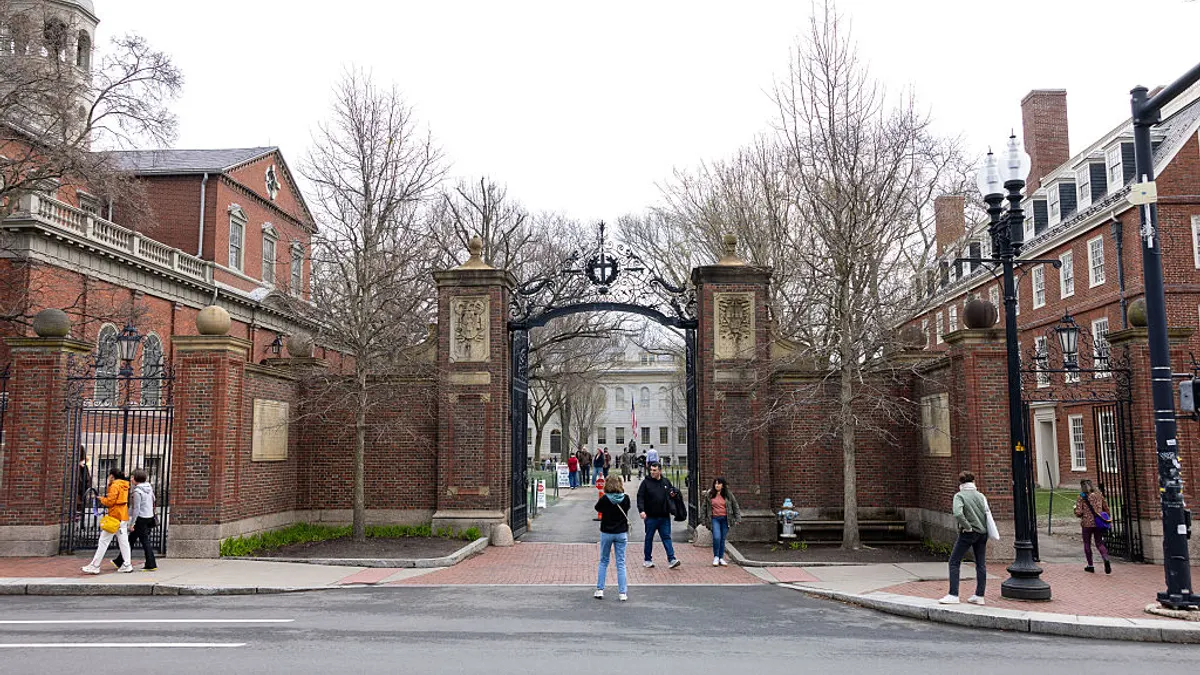
Every year, something happens in college admissions that confuses almost everyone. A student with a 4.2 GPA, 1520 SAT, and abnormally long list of impressive extracurriculars gets rejected from top multiple schools. Meanwhile, another student with slightly lower numbers get admitted. To students and parents watching from the outside, it creates the impression that there’s some sort of random lottery system in place. But admissions decisions are almost never random. What’s usually happening is the difference between being competitive and being admissible.
Most applicants, whether in high school or community college, focus almost entirely on competitiveness. What does that usually look like? It usually looks like building the strongest academic profile possible, with high grades, challenging classes, strong standardized test scores, leadership positions, meaningful activities, etc… Don’t get me wrong, that absolutely matters. Colleges want to admit students who can handle the academic rigor of their institution (yes, Berkeley, I’m talking about you), and the first thing admissions officers look for is whether an applicant has demonstrated that level of readiness. In other words, competitiveness is the baseline requirement. Think of it like a filter. If your academic preparation doesn’t pass the first phase of the filter, the rest of the application simply won’t matter.
The thing is, at highly selective schools, the majority of applicants already pass that first stage. We’ve worked with thousands of students every year who have taken demanding courses, earned straight-A’s, and pursued impressive extracurricular activities. Admissions officers aren’t sorting between qualified and unqualified students. Instead, they’re sorting between many different qualified students, all of whom would probably succeed at their university.
Now, not to get too philosophical, I want to introduce to you the concept of admissibility. Colleges don’t care about simply admitting the students with the most impressive resumes. They are building a class, and building a class means thinking about how different students will fit in together to create a dynamic campus environment. Admissions committees want to see future scientists and artists, economists and historians, engineers and writers. They want students who will start clubs, lead research labs, play in orchestras, build multi-million (if not billion) dollar startups, challenge ideas in seminars, essentially bringing different perspectives to their campus.
Because of this, admissions decisions often come down to how clearly a student’s application communicates who they are and what they care about. Many competitive applicants have impressive accomplishments, but their application feels a bit scattered. Maybe they participated in a large number of activities but never went deep in any particular area. Maybe their essay is polished but generic (which happens a lot today in the world of AI). The admissions reader may see that the student worked hard, but it can be difficult to understand what truly motivates them.
Admissible applicants tend to feel different when admissions officers read their file because their application has a sense of direction. Their coursework, extracurriculars, essays, etc reinforce each other in ways that makes their interests clear. It doesn’t feel like they’re trying to check every possible admissions box. Instead, it feels like they followed genuine curiosity over time. When admissions officers read those applications, they can more easily imagine the role that student might play on campus.
Another factor that shapes admissibility is something applicants don’t see, and definitely don’t have control over: the broader applicant pool. Admissions committees review tens of thousands (hundreds of thousands if you’re the UCLA admissions committee) during a single cycle, and patterns emerge quickly. If a school receives a large number of applications from students with nearly identical profiles, admissions officers often have to choose between them. Guess what helps them make their decision: whoever has a more definitive narrative and intellectual focus.
Timing also plays a pretty big role. A student who might have been admitted one year could be waitlisted in another simply because the composition of the applicant pool changed. Institutional priorities shift as well. A university might be particularly focused on expanding research in certain fields, increasing geographic diversity, or strengthening specific academic departments. Unfortunately, these factors don’t appear in public admissions advice, but they influence how a class is assembled.
For students, this can be frustrating because it means there is no perfectly engineered formula that guarantees admissions to a highly selective school. But it also means that admissions is not simply a competition to accumulate the longest list of achievements. What matters just as much is how those achievements connect to the larger story of who you are.
Ultimately, the goal of a college application isn’t just proving that you’re capable. Your application does that for you already. It is to help admissions officers understand the kind of person you are and how you might contribute to the intellectual and social life of the campus.
Competitive applicants demonstrate strong preparation. Admissible applicants make it easy for admissions committees to imagine them as part of the community they’re building.
Understanding that difference can completely change how students approach the admissions process. Instead of trying to look impressive in every possible way, we’ve found that the stronger strategy is often to focus on depth and authenticity. When an application clearly reflects what a student genuinely cares about, it becomes so much easier for admissions officers to see where that student fits within the class they’re trying to create.
If you are struggling to create your own narrative, and are looking for help with creating a personalized profile for college admissions, DegreeMentors is the perfect match for you. Our mentors are trained specifically to help each student find their narrative and passion, and highlight that within their applications. For more information, contact us at contact@degreementors.org.